Vulnerability and resilience to climate change in tropical and subtropical Mexican forests
Project info
Status: Writing results
Span: 2021-2025
Location: Autlán de Navarro, Jalisco, Mexico
Contact: Karolina Riaño (karolina.riano@academicos.udg.mx)
Summary
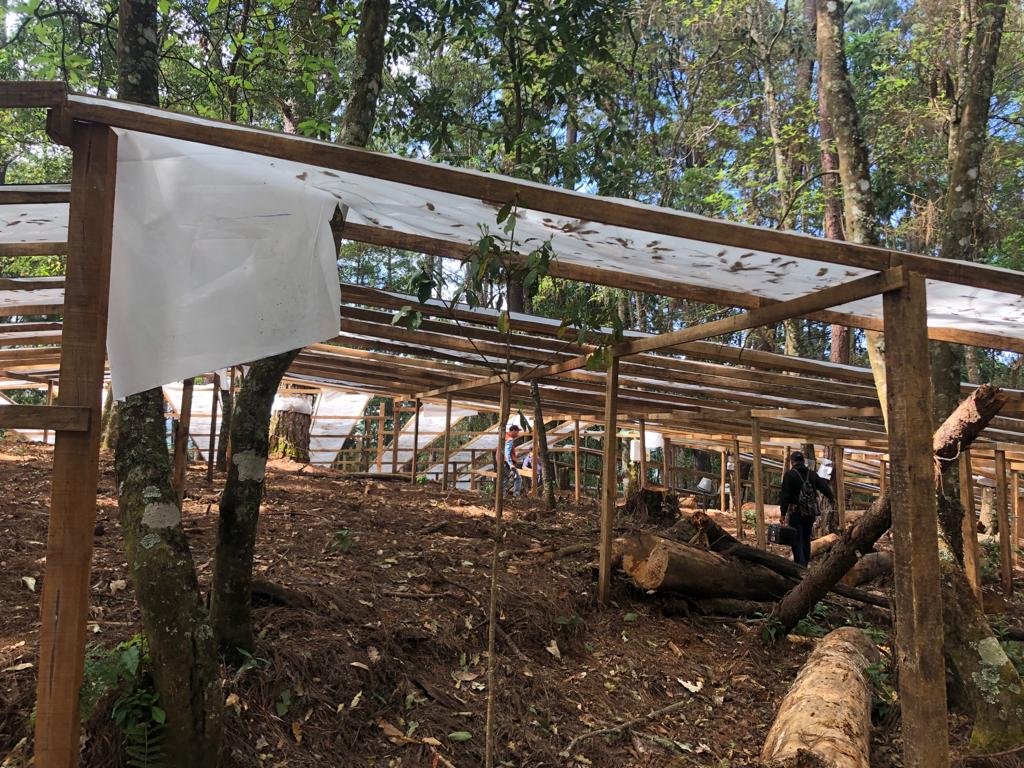
The objective of this project, is to understand how Mexican tropical and subtropical forest will respond to climate change, to be able to propose management alternatives capable of increasing forest resilience to extreme weather. We are monitoring two dominant species using a series of measurements, including sap flow sensors, and a system of roofs to block the amount of precipitation that trees receive (i.e., a rainfall exclusion experiment).
The first rainfall exclusion experiment in Mexican forests
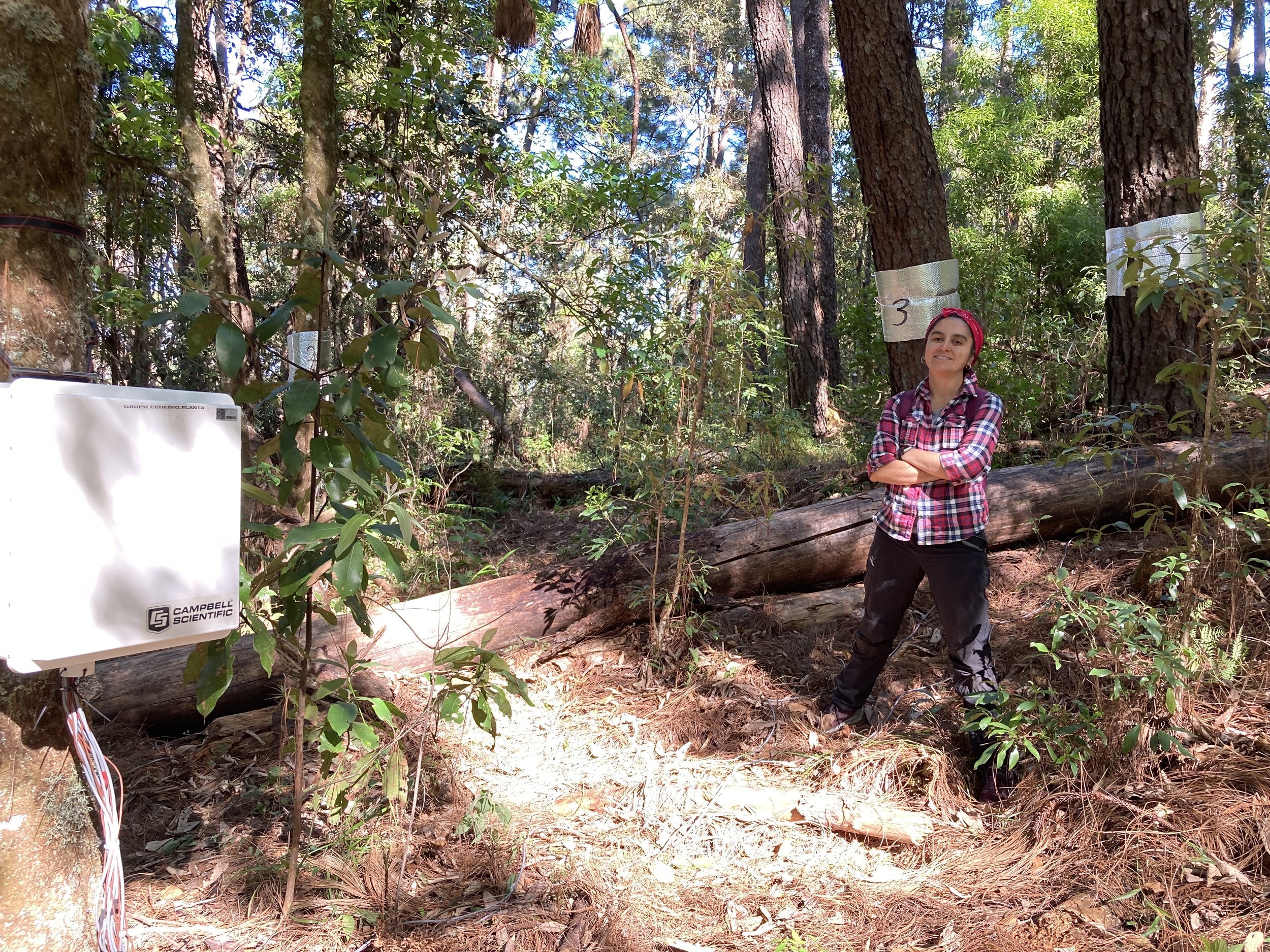
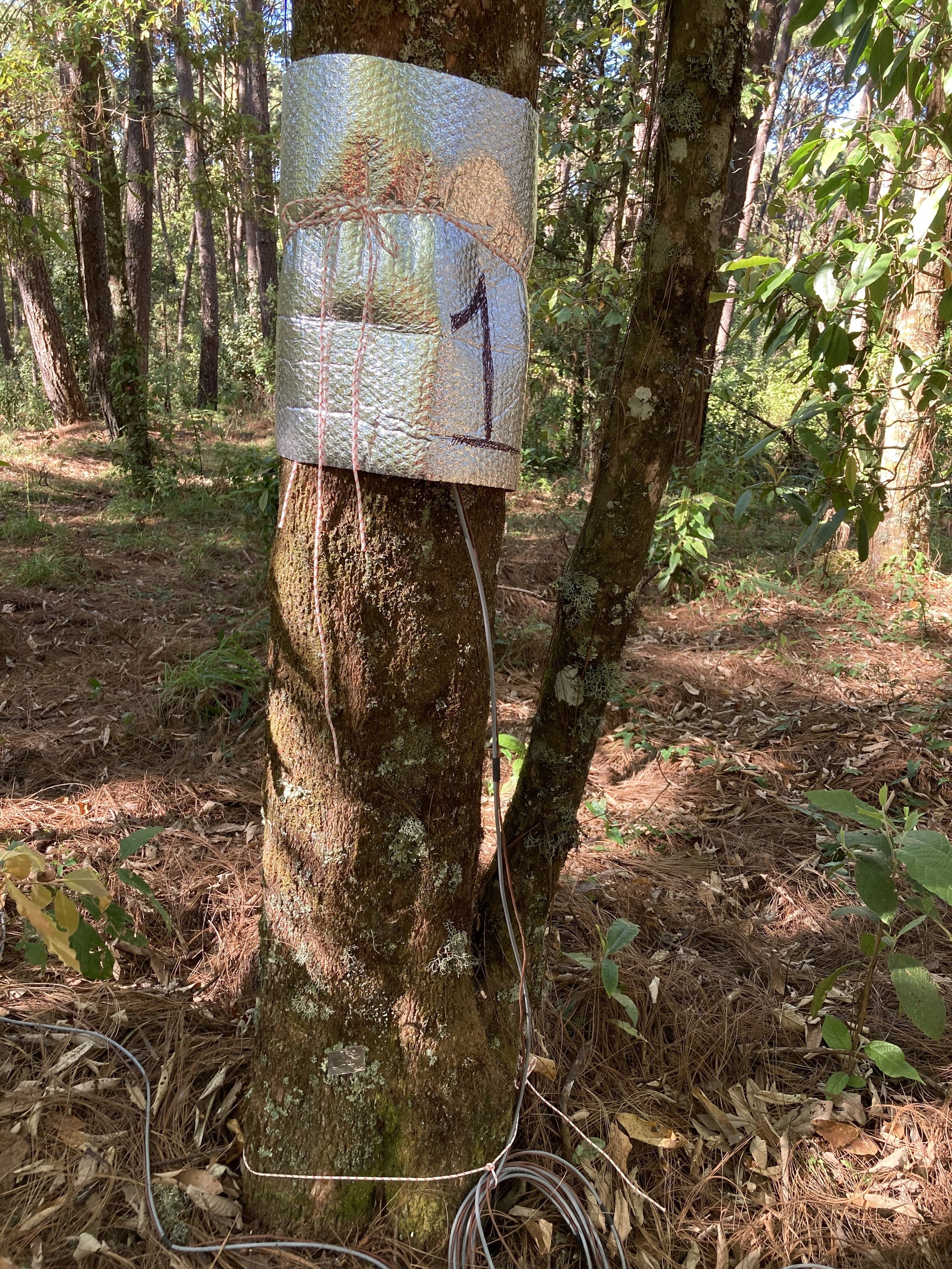
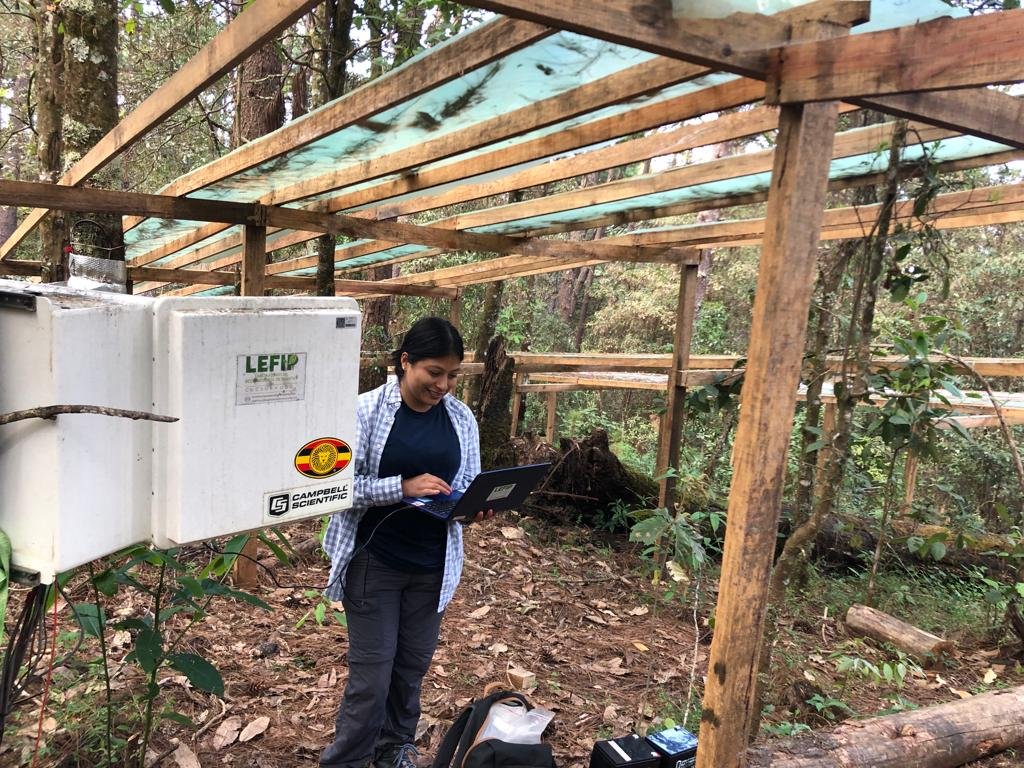
In this project we have one of the most comprehensive monitoring systems in the world. First, we measure sap flow (three depths into the sapwood: 1, 2 and 3 cm), using heat pulse sensors and process data according to various methods (heat ratio, maximum heat ratio, Tmax, etc.). Sap flow is measured on the north and south sides of the stem, to capture most of the radial variability. Additionally, we are monitoring stem water content using capacitance sensors, which we have validated in the lab (see project Stem water content). Finally, we are also monitoring stem water potential using FloraPulse sensors.
Since we are interesting in addressing the issue of capacitance in boreal trees, all measurements mentioned above (except stem water potential), are repeated at three different heights: 1.3 m, 8 m and 15m. Water potential is only measured at 1.3 and 8 m.
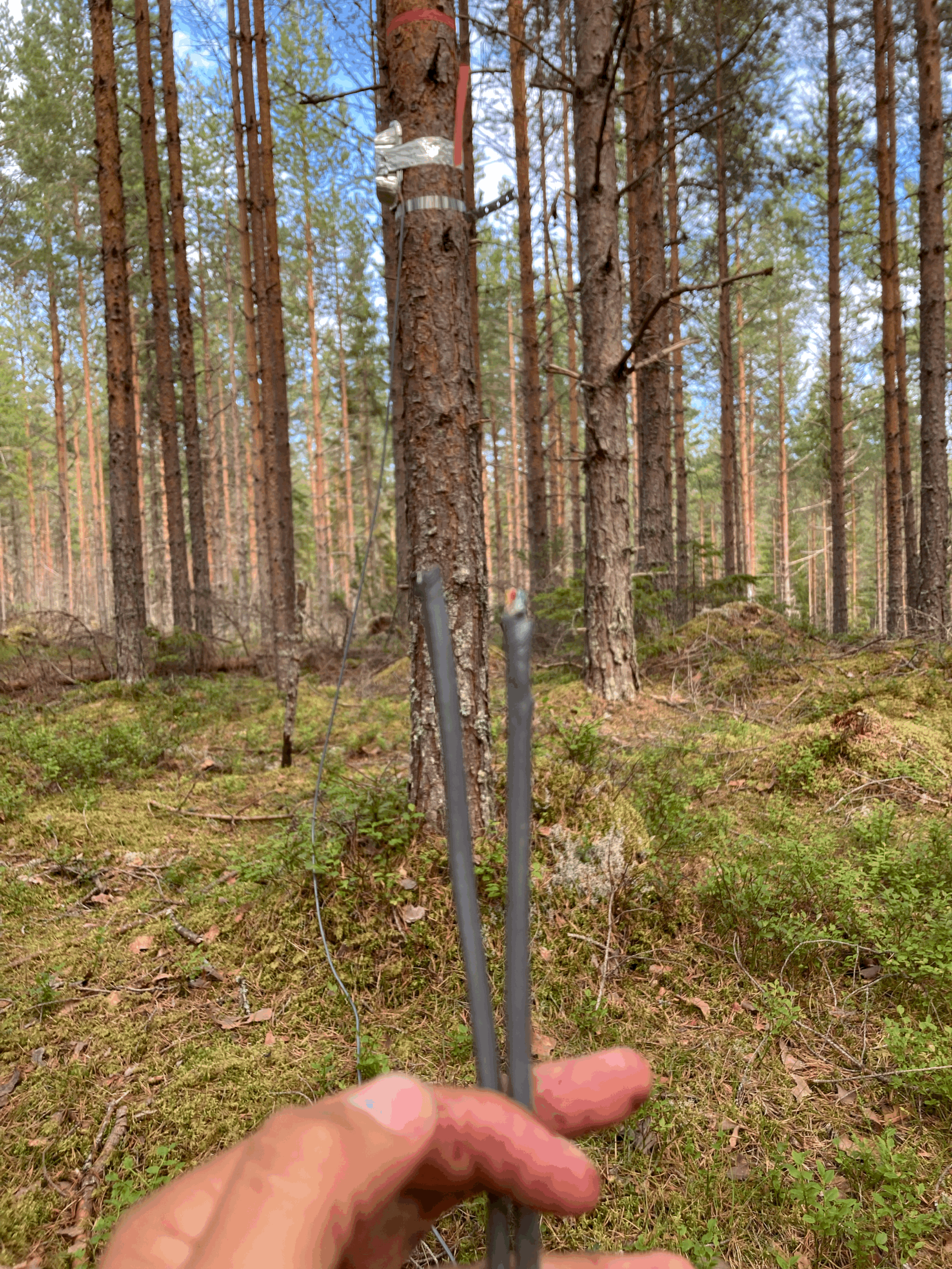
Photo Gallery