Flakaliden Research Study:
Long-term field experiment to test the impact of climate change on forest growth
Project info
Status: Deploying second set of environmental and sap flow sensors
Span: 2025-2031
Location: Flakaliden Experimental Forest, Vindeln, Sweden
Contact:
Project direction: Hjalmar Laudon, Hyungwoo Lim, Jose Gutierrez Lopez, (Jose.Lopez@slu.se, Hyungwoo.Lim@slu.se, Hjalmar.Laudon@slu.se)
Data collection and instrumentation: Jose Gutierrez Lopez
The beginning of a new flagship research project
This field experiment is funded by the Kempe Foundations with SEK 7 million. It is co-funded by the Knut and Alice Wallenberg Foundation with an equal amount, as part of a major investment in research infrastructures within the Wallenberg Initiatives in Forest Research (WIFORCE). In this project we will:
Manipulate earlier snowmelt, to see whether increased runoff in spring leads to water shortages in summer.
Manipulate summer drought, by excluding rainfall to the ground. Some plots are also fertilized, to study how fertilization affects tree drought tolerance.
Increase air temperature, using special climate chambers where researchers also monitor the trees’ water transport systems.
As the air becomes warmer and drier, trees lose more water to the atmosphere. In the worst case, this can damage the trees’ water transport system – a phenomenon known as cavitation – and lead to long-term growth declines, even if weather conditions later improve.
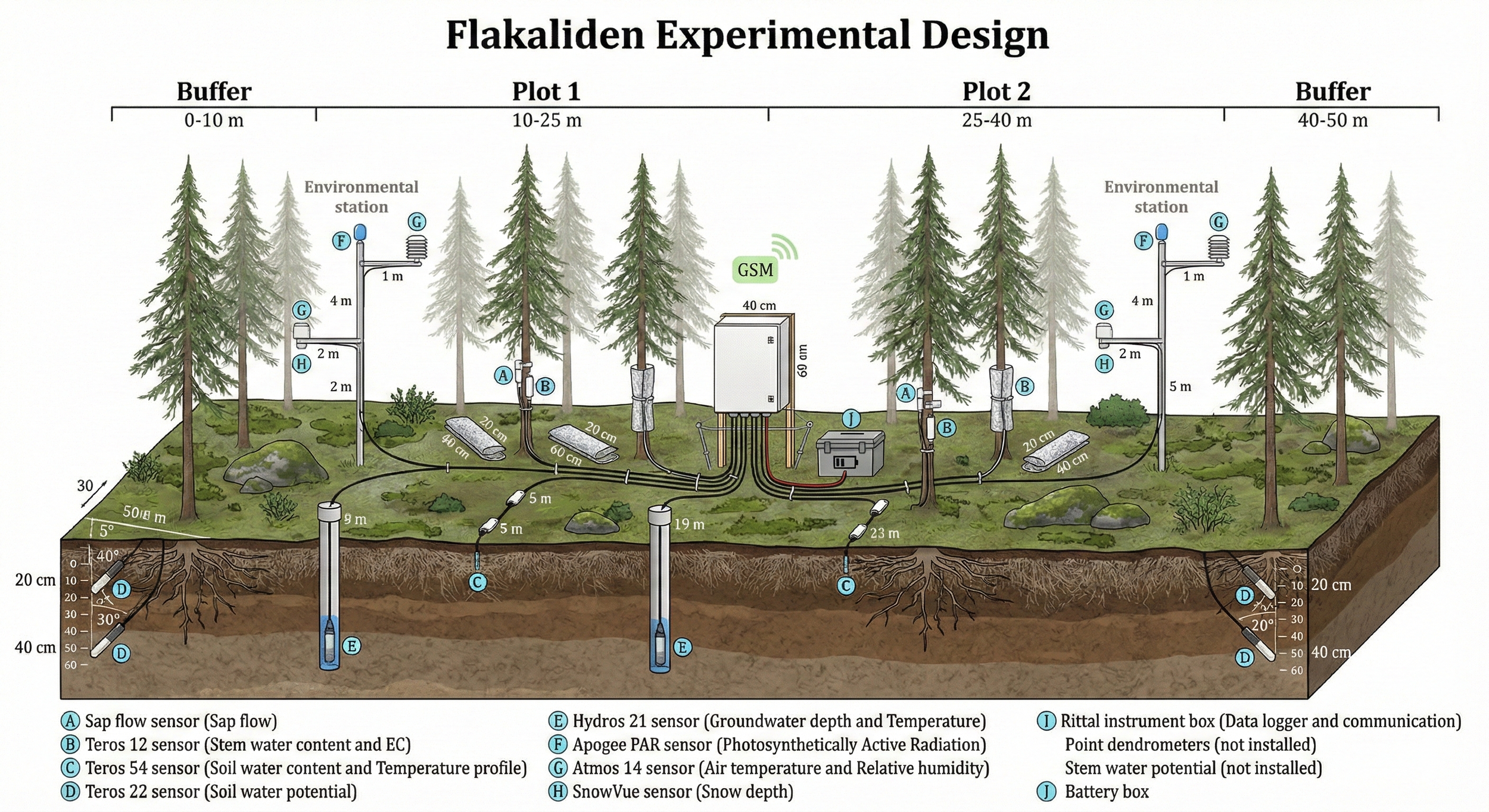
A world-class experimental design
The Flakaliden project has reached a major milestone: Full deployment of sensors. Now that all sensors are deployed, installed/wired, now we will focus on next stage: cable management and site-specific adjustments.
This expansion transforms our monitoring capabilities, moving us toward a fully integrated, high-resolution view of the ecosystem's "pulse."
Phase 3: Deployment
Now that we have written all codes to talk to multiple sensor, from multiple vendors, to follow a coherent data collection and transmission protocols, we focus on the field-intensive their stage: deployment. During deployment we will:
Spatial design: Locate strategic points in the forest where we can install a vast array of environmental and tree-level sensors to capture the full Soil-Plant-Atmosphere Continuum.
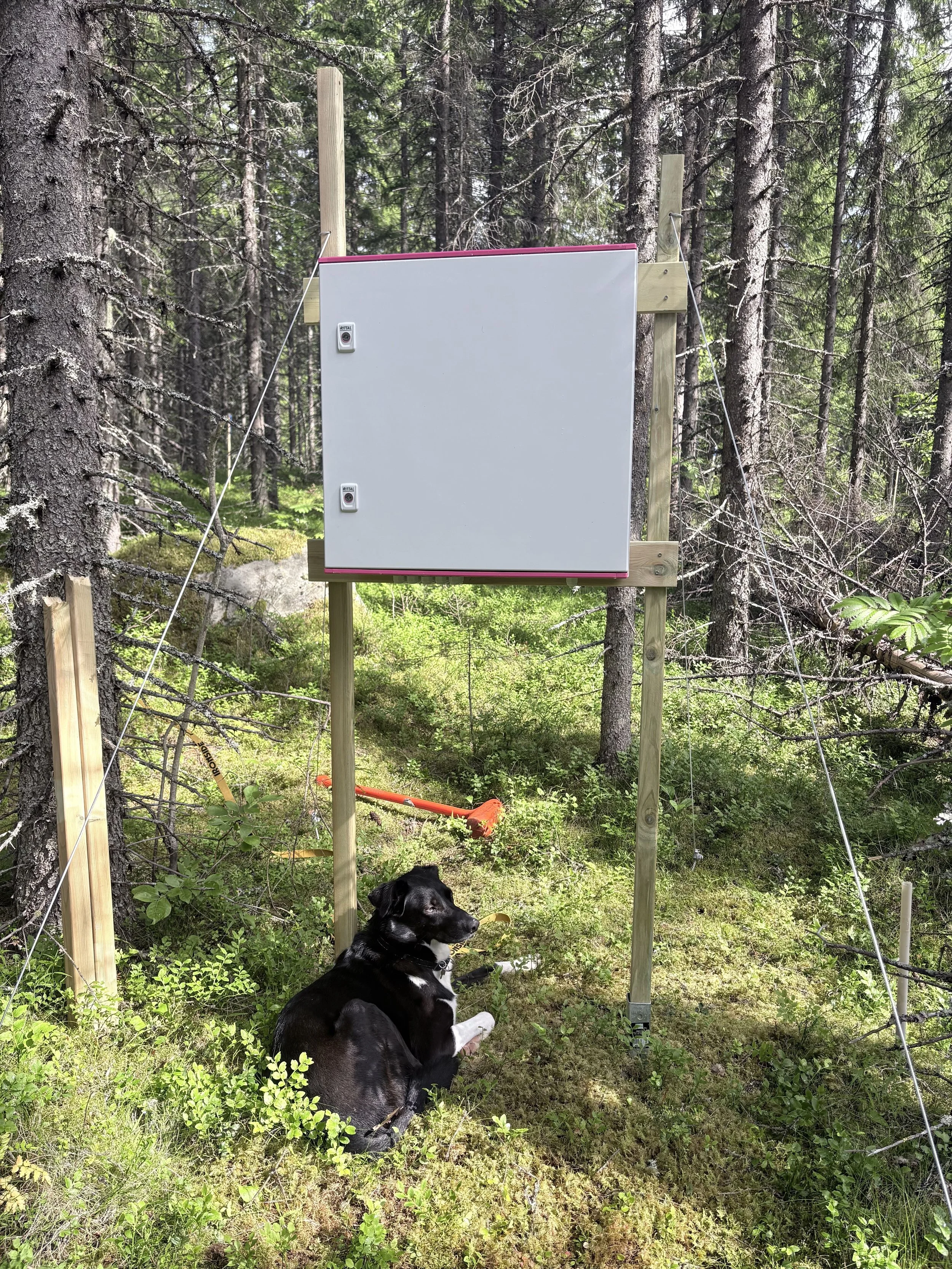
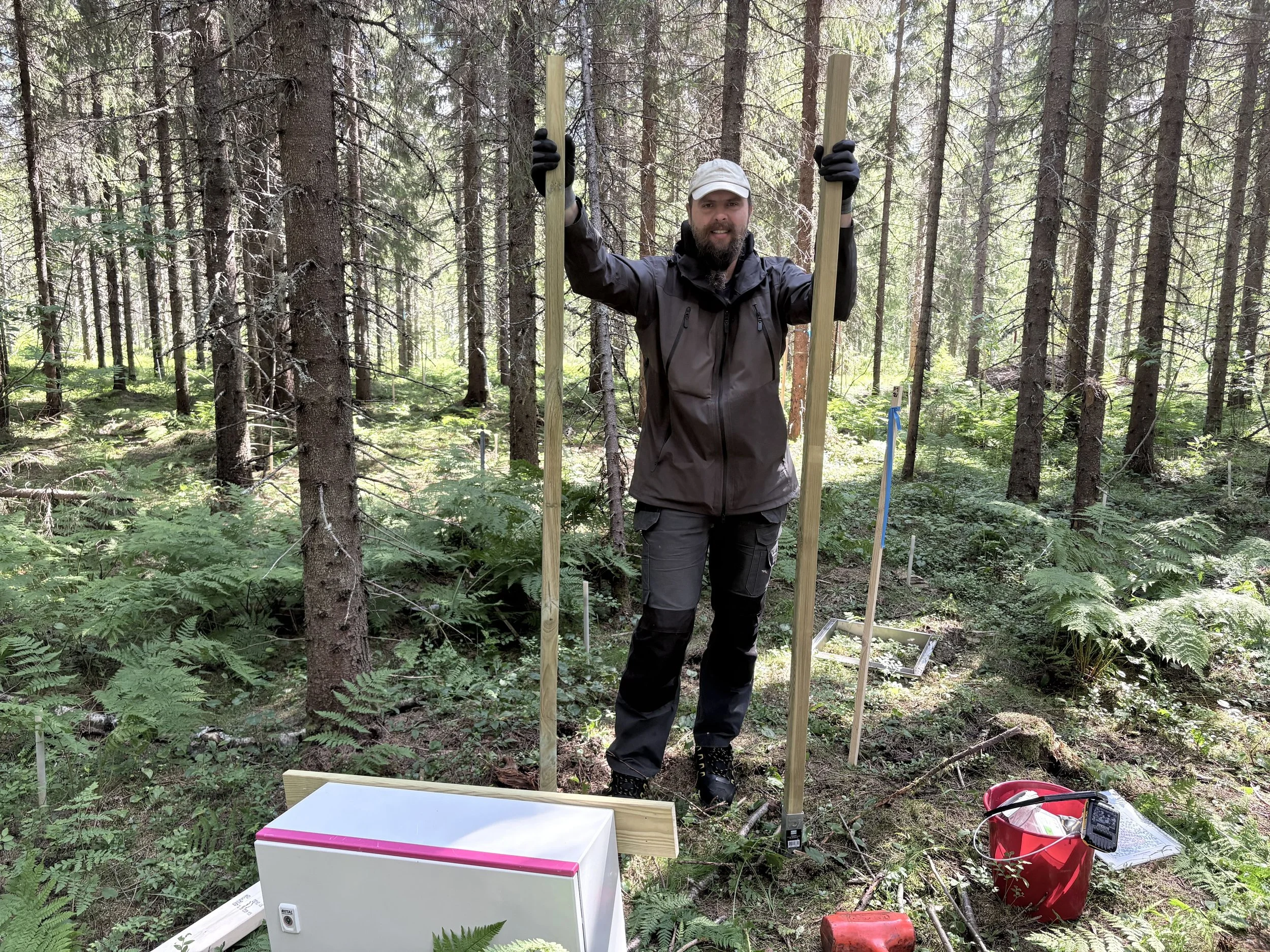
Deployment: Data quality is directly linked to sensor installation and deployment. From drilling techniques for sap flow sensor installation, to proper installation protocols of soil moisture and soil water potential sensors, we are dealing with every small detail.
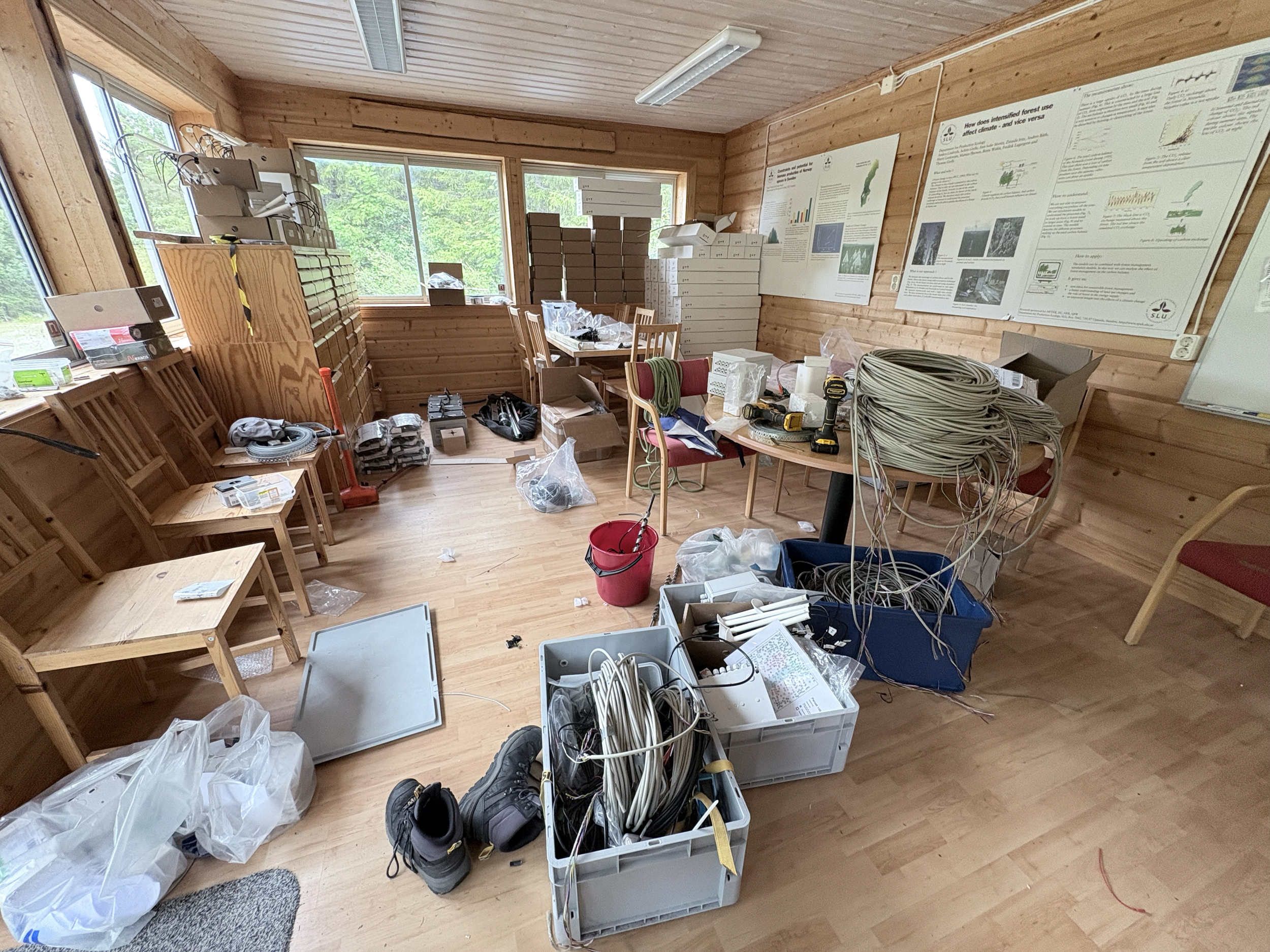
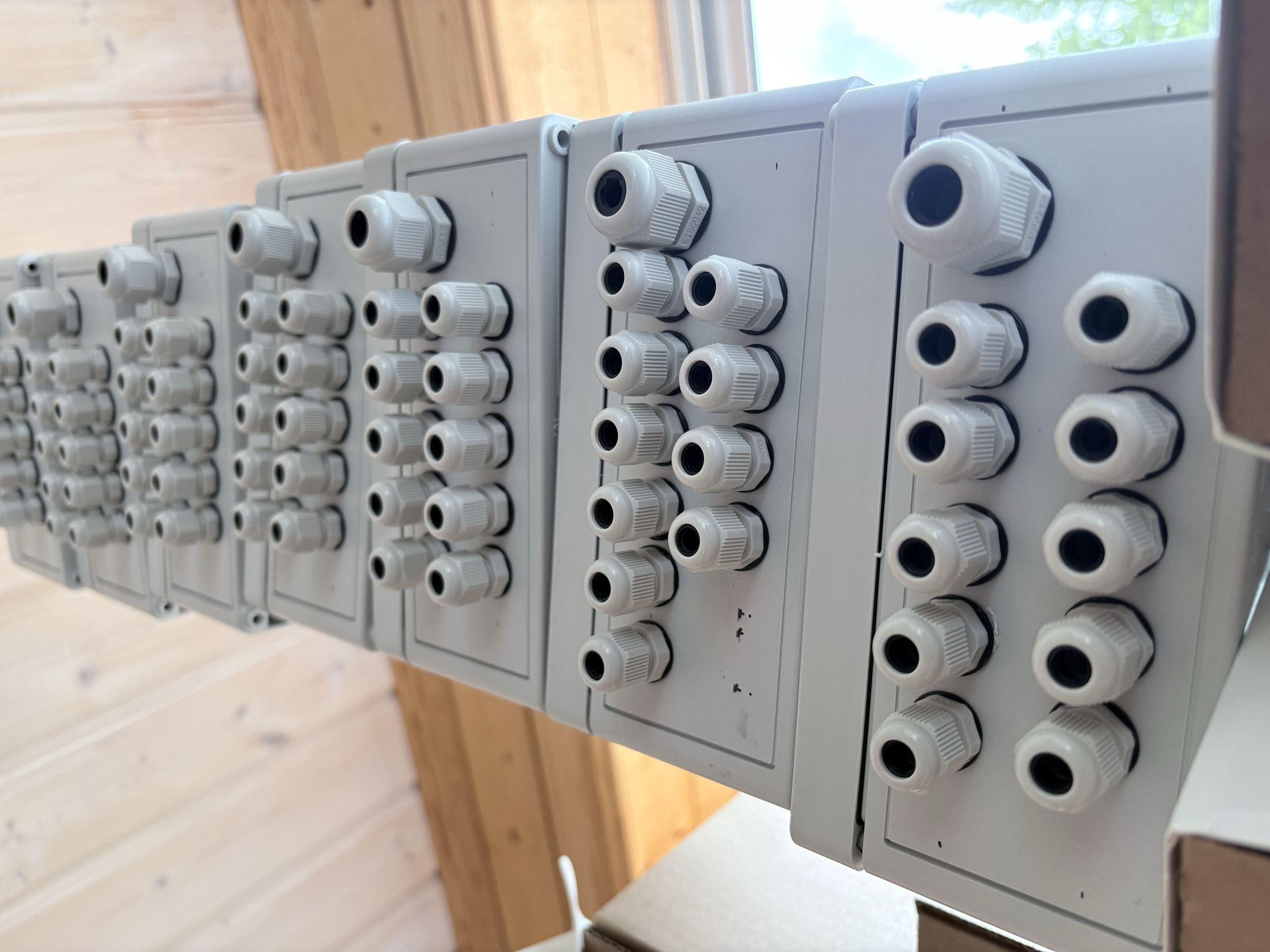
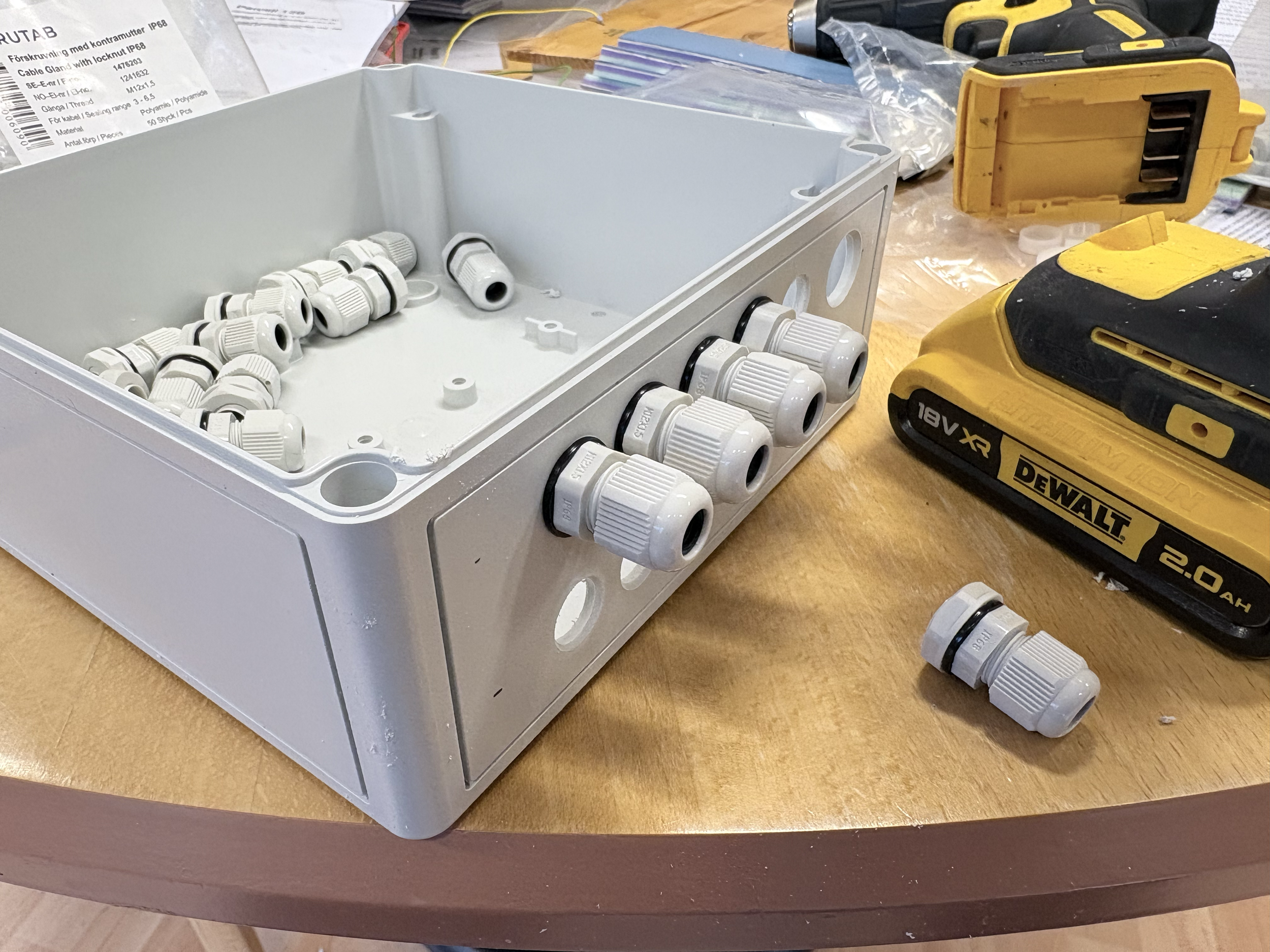
Wiring: Design and implement wiring systems that allow us to combine multiple digital sensors from different vendors, into a single wire and single port in our data loggers. This step is crucial to reduce the amount of wires in the field.
Key Additions & Their Strategic Value
The new sensor suite allows us to bridge the gap between environmental "supply" and plant "demand."
1. Below-Ground & Hydrological Dynamics
Soil Temperature, Water Content and Potential: These allow us to move beyond simple moisture levels to understand exactly how hard a plant must "work" to extract water from the soil.
Groundwater Depth, Temperature and Electrical Conductivity: Essential for tracking the water table's influence on root zones and the thermal stability of the subsurface environment.
2. Atmospheric Drivers
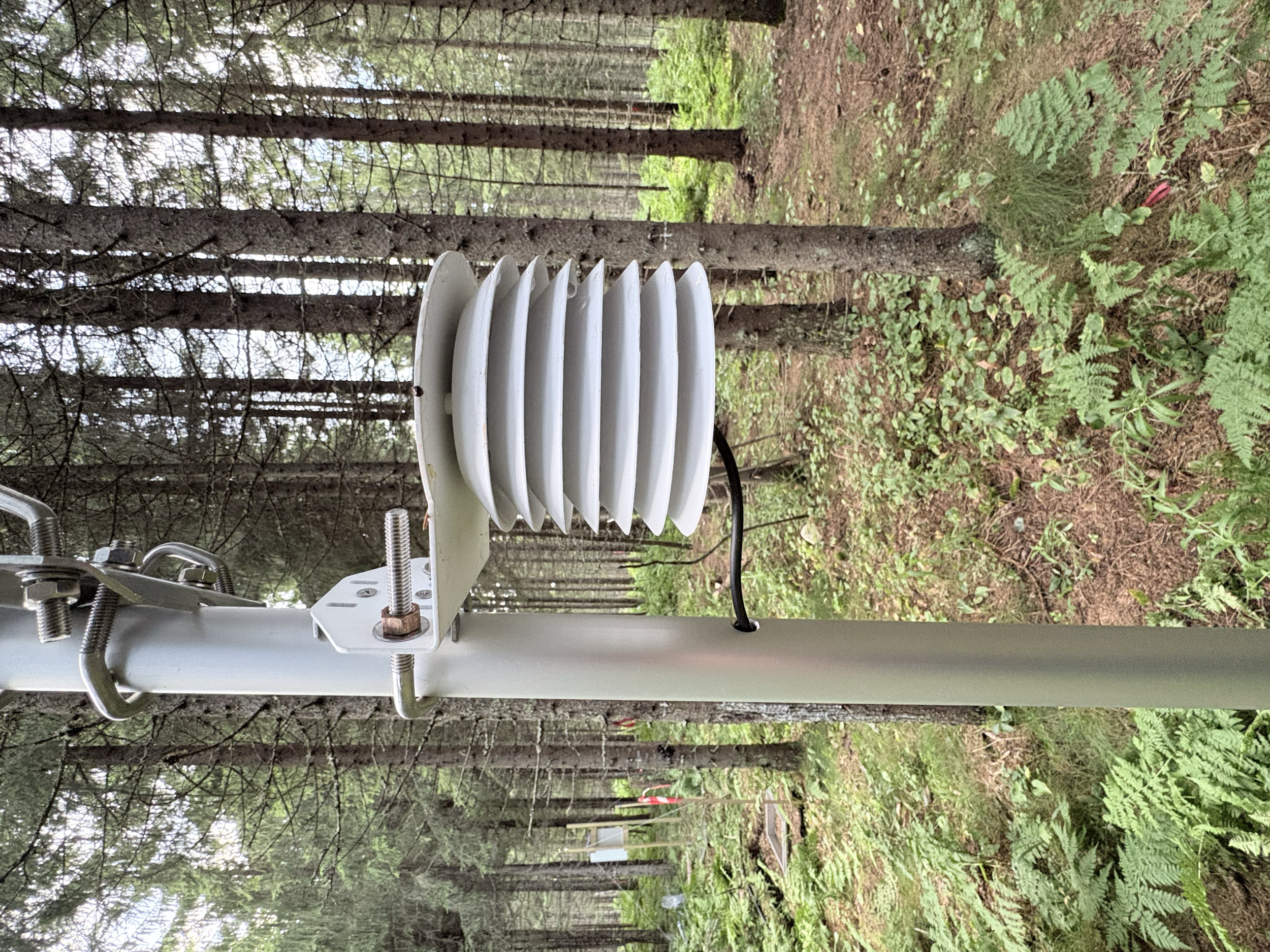
Air Temperature, Relative Humidity and Atmospheric Pressure: Combined, these define the Vapor Pressure Deficit (VPD), the primary atmospheric "tug" that pulls water through the trees.
Photosynthetically Active Radiation (PAR): Directly measures the light energy driving photosynthesis, allowing us to correlate growth with available solar energy.
Snow Depth: Provides critical data on winter insulation for roots and the timing of the spring "recharge" for the water table.
3. Plant-Level Physiology (The Tree "Heartbeat")
Sap Flow & Point Dendrometers: These measure the actual movement of water through the xylem and the microscopic growth/shrinkage of the trunk, giving us real-time feedback on tree health.
Stem Water Content: These sensors provide a rare look into the tree's internal plumbing—revealing how much water is stored in the wood and how much "stress" the hydraulic system is under during dry spells.
Sensor Deployment Summary
Hydrology:
Soil moisture and temperature at 4 depths (15, 30, 45 and 60 cm). Six replicates per site.
Soil water potential and temperature at 2 depths (20 and 40 cm). Four replicates per site.
Ground water depth, temperature and electrical conductivity. Two replicates per site.
Snow depth. Two replicates per site.
Atmosphere:
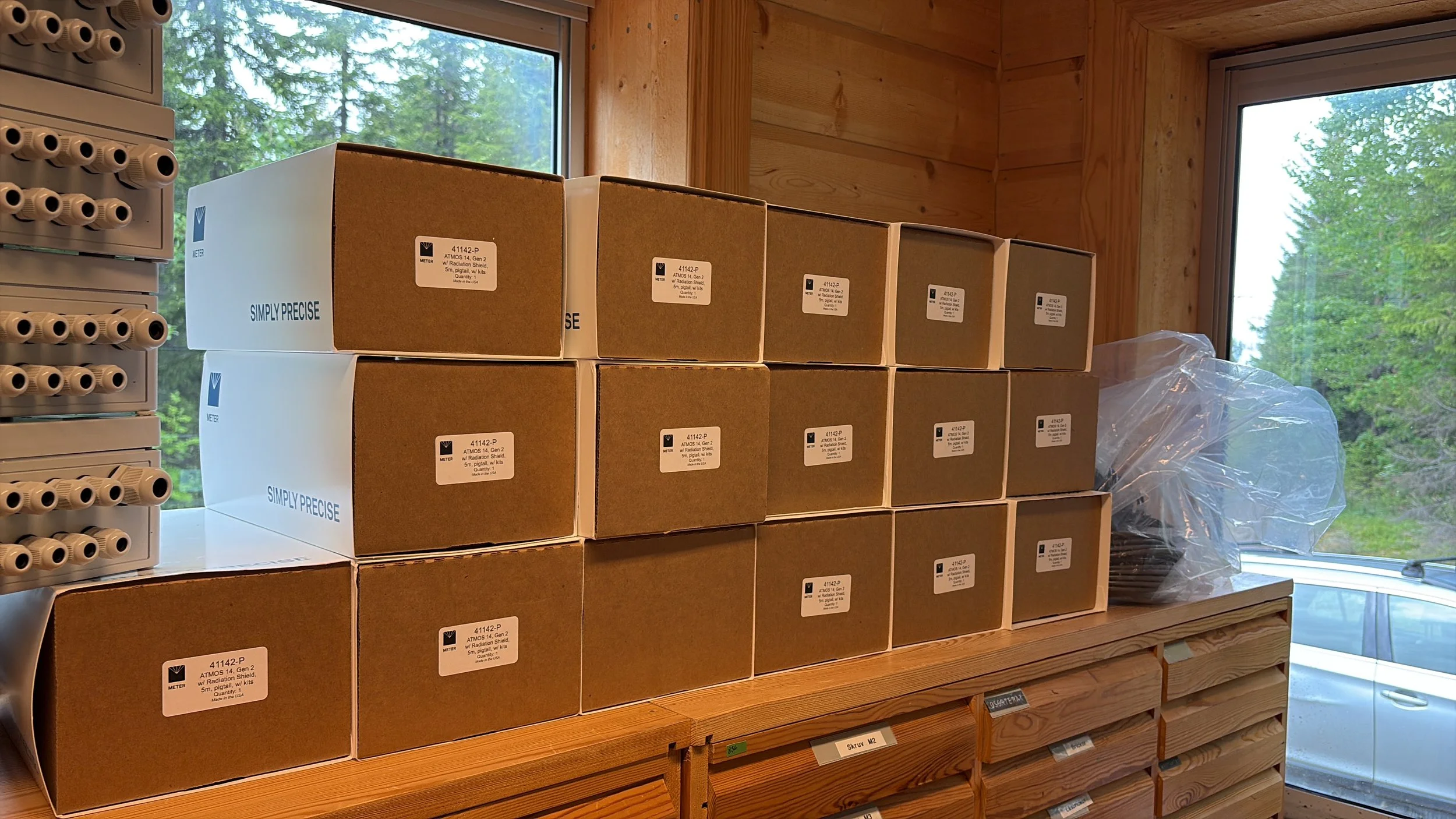
Air temperature, relative humidity, atmospheric pressure. Two replicates per site.
Photosynthetic active radiation. To replicates per site.
Tree physiology:
Sap flow sensors. Four replicates per site. Expandable to 10 per site.
Point dendrometers. Four per site. Expandable
Stem water content. Four per site. Expandable
Want to follow along?
Fieldwork, Fieldwork, and more Fieldwork, that is all we do these days. Feel free to follow the progress on my IG account. With a fair warning that you are stepping into my personal, unfiltered space.
Image gallery